A BROAD ABROAD: GHANA
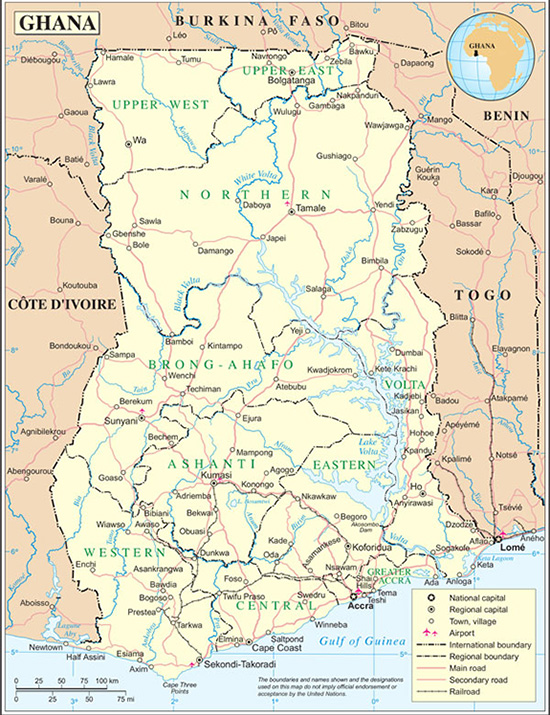
In Ghana, “holding court” in the 21st century is no longer reserved for royalty. Ghana’s Asante kings’ court gatherings, known as the Akwasidae Festival, are held on Sundays that falls every 40 to 42 days in their nine month calendar, and are open to aristocrats and commoners alike. This festival is part of the Adae Festival which also includes the Awakudae Festival that occurs on the Wednesday prior to the Akwasidae Festival. The most famous location for Akwasidae Festival is the MANHYIA Palace courtyard in Kumasi.
The Asantehene, King of the Ashanti, expect both commoners and subordinate kings attending the dubar (court) to pay tribute. At these Modern-day durbars, the tourist serve the role of foreign dignitaries.
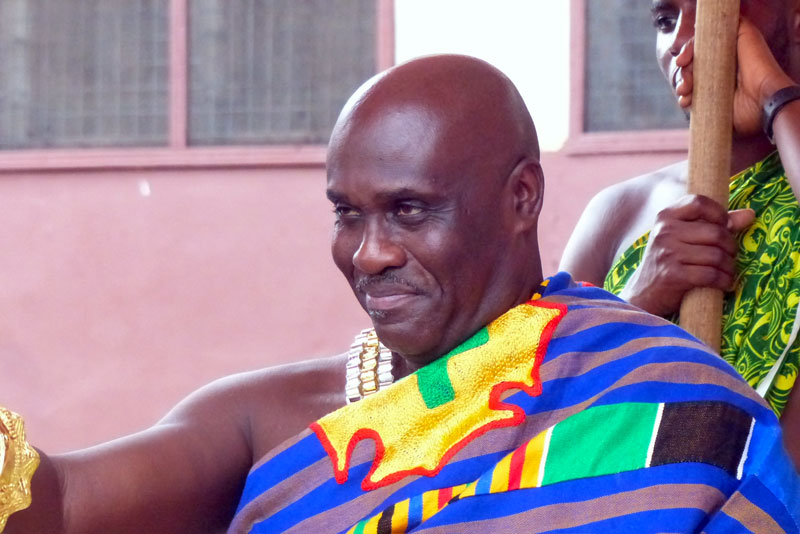
Since the Ashantehene was away from the palace on our Sunday visit, we were unable to witness the procession nor view the golden stool which are always part of the palace festival. As a substitute, we attended the Akwasidae Festival at the court of a secondary king who reigned in an adjacent town. Although we had to forego the king being paraded on a palaquin and the presence of the gold stool on display, there was plenty of music, dance, singing and pageantry to make up for any lost pomp.
Header image: Gul Isik
Holding court
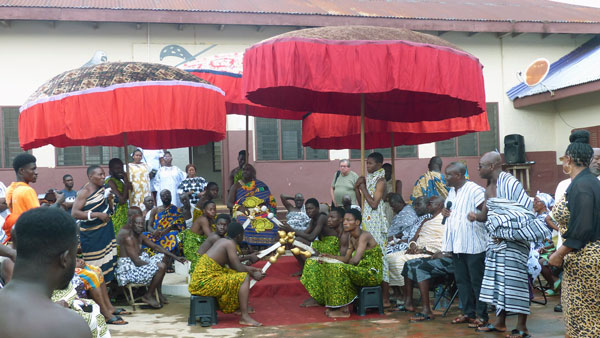
The suburban king held his court in a small, nondescript courtyard. Guests and the drum orchestra, and king’s secretary sat on the opposite side of the courtyard under a canvas roof.
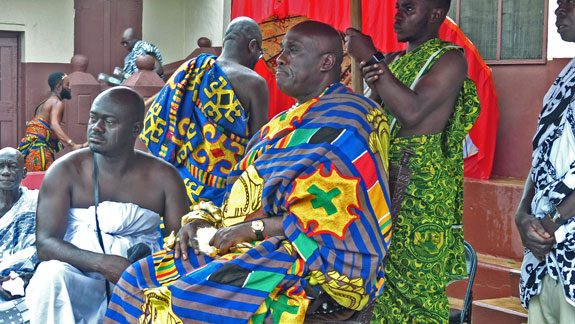
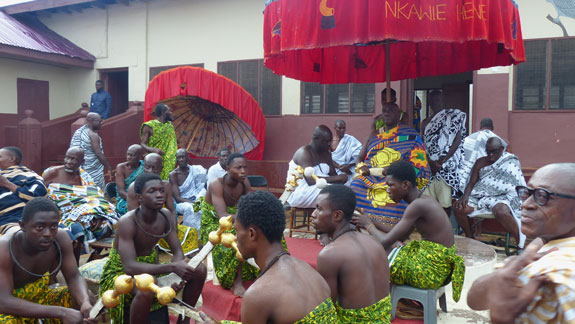
The king, his guards, and courtiers were at the far end seated under three large red umbrellas. Guests entered the courtyard in a line and each took turn greeting the king before taking a seat.
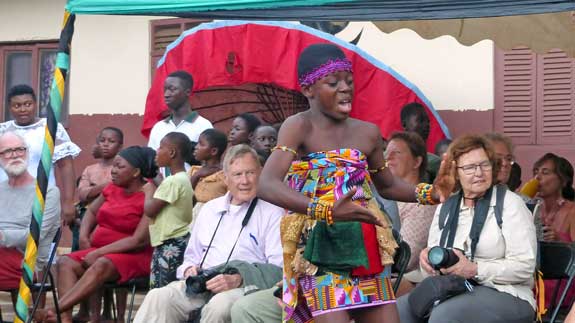
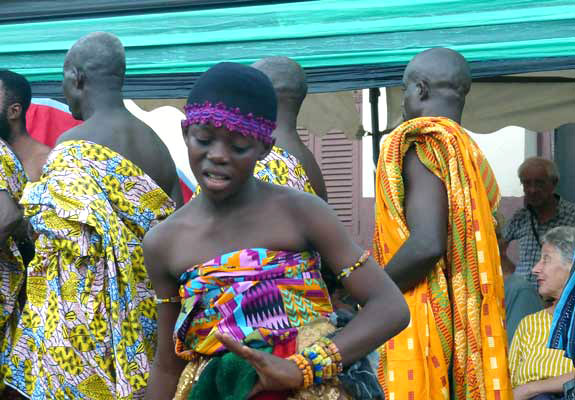
The court yard’s open center area served as a stage for the young female singer/dancer who was accompanied by a drum orchestra.
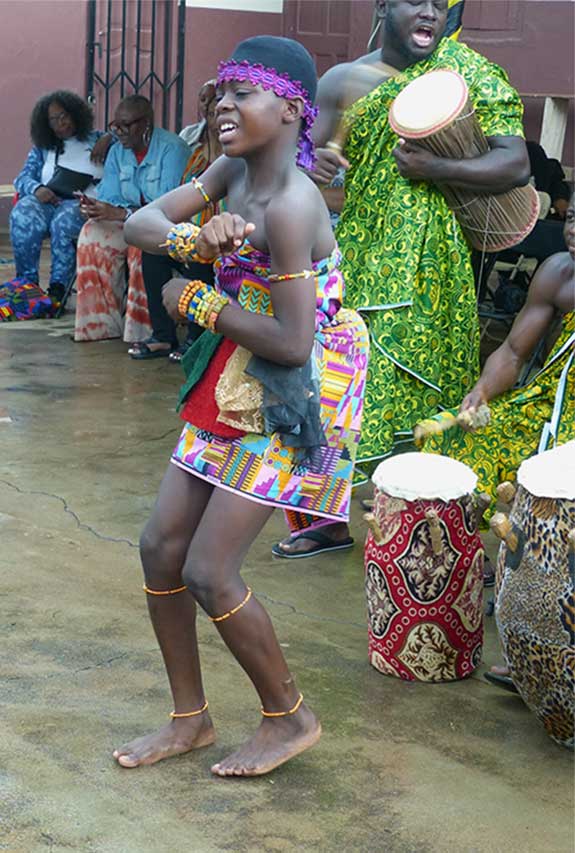
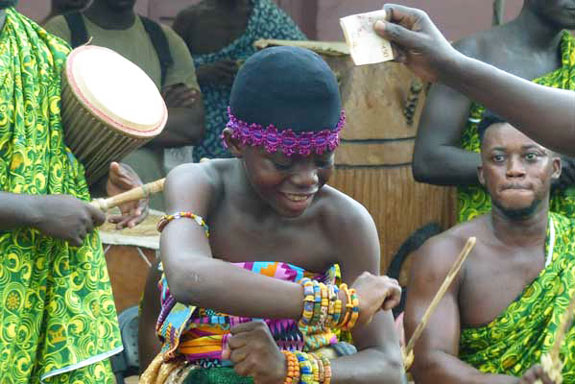
The young girl performed for the king, but she very much played to the audience who occasionally showed their pleasure by handling her cash to convey their appreciation of her performance.


The Royal priest dances for the King
A steady stream of visitors continually worked their way to greet the king, and leave their gifts with the king’s secretary.
A priest also attended to the king. Dressed in jean shorts with a flowing shirt, he went into an ecstatic dance resembling a whirling dervish. The royal salon can last for hours with a steady stream of visitors.
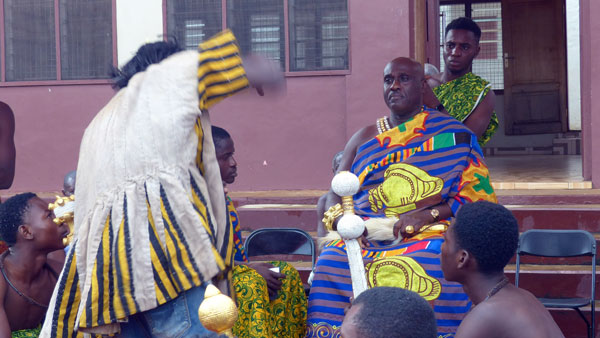
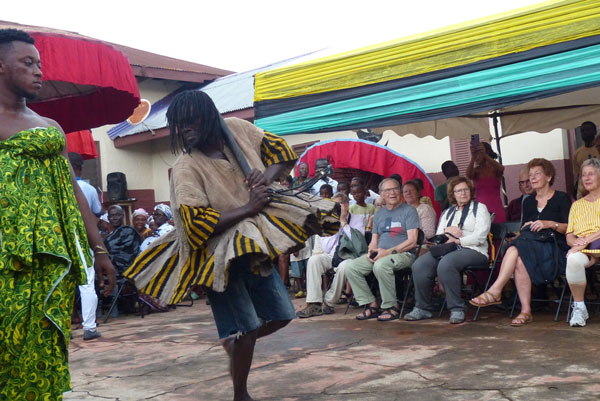
The arrival of a king from a neighboring town with his entourage seemed quite routine until that very king, after greeting the hosting king, reappeared as a priest dressed in white with a dagger in his mouth.

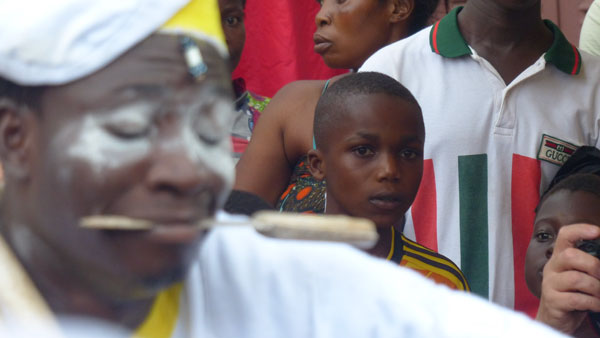
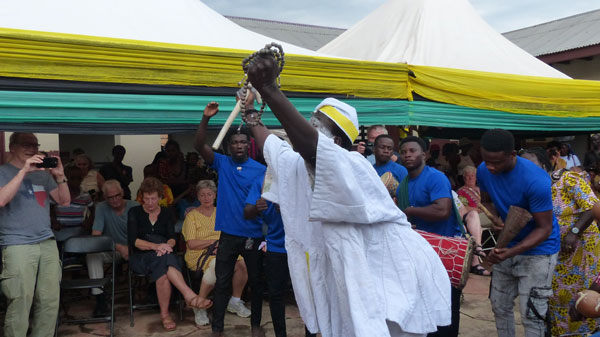
He then proceeded to take center stage and confront the presiding king’s priest. We knew this was a usual occurrence when our guide pulled out his phone and started videoing the scene of the “dueling” priests. When priests become kings…
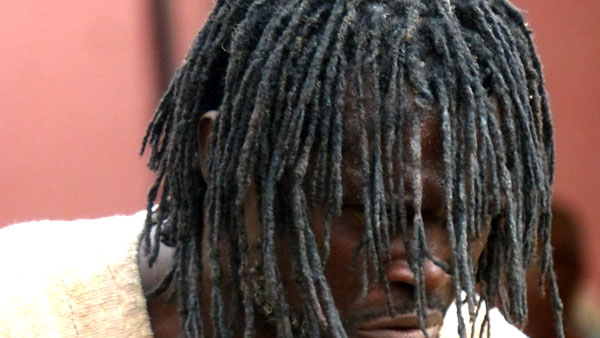
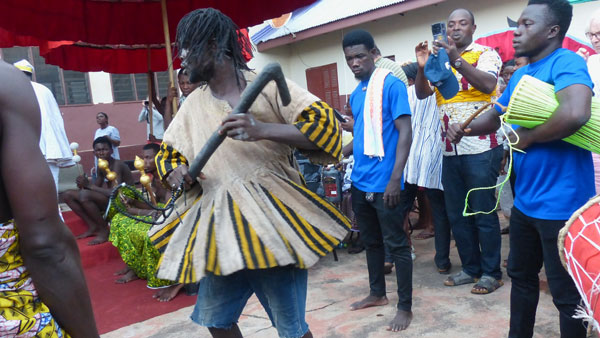
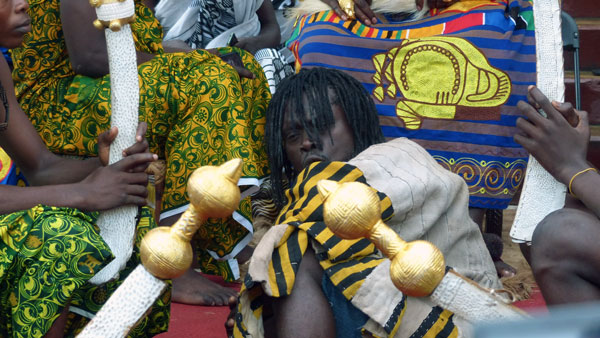
The King's priest falling back in the crowd with knife held in the hand of the villagers. Two golden sceptres are visible in the foreground.
Click to see my recent West African Travelogs:
Millet Festival, Ghana
|
Soul of West Africa
|
Voodoo, Benin